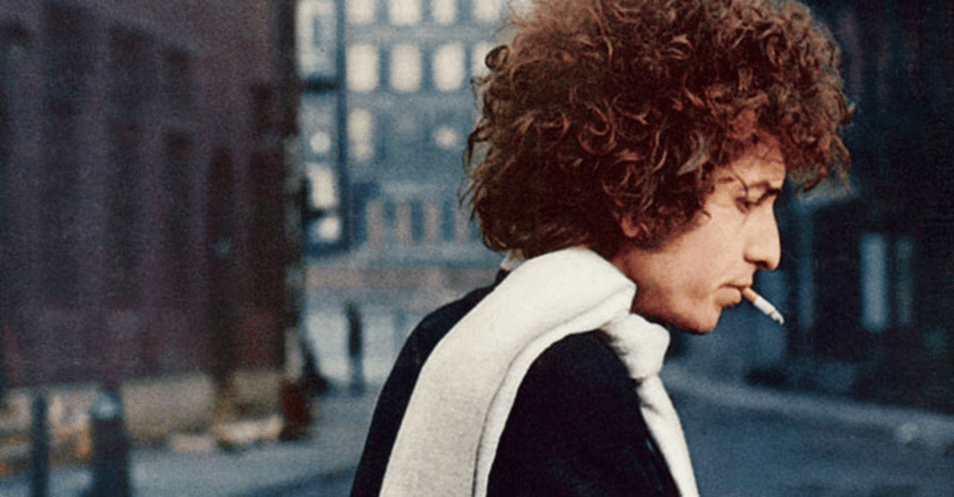
(This is the text of a talk given in Holy Trinity Church Ventnor on July 25th 2024. The YT links lead you to the song in question)
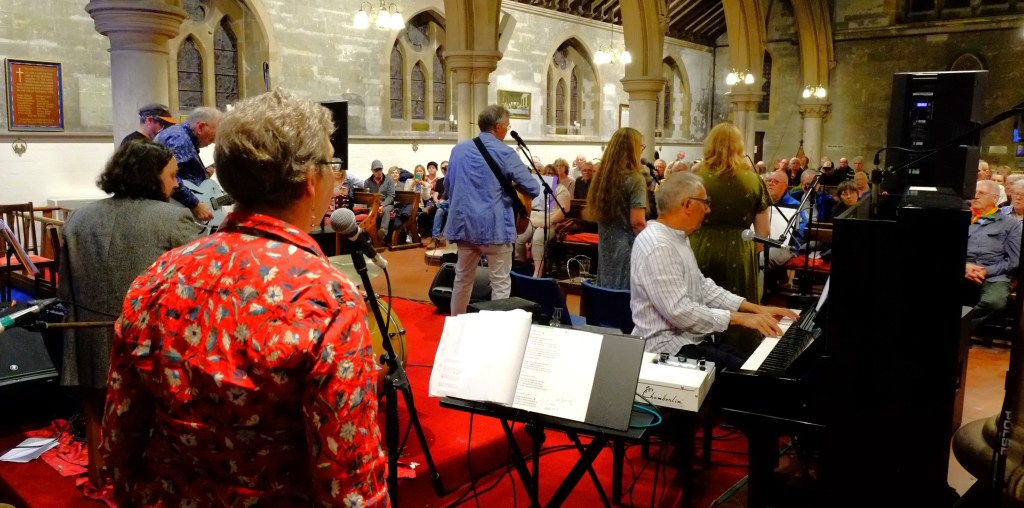
‘The times, they are a-changin’ (https://www.youtube.com/watch?v=90WD_ats6eE)
I thought we’d start with one you all know! The great thing about that song is the way it grabs your attention.
It’s a funny thing being known as a Dylan fan. Most people are a little mystified, especially when they know how important it is to you because, unlike The Beatles, or Abba, he isn’t well-known, even though he is greatly revered by experts and musicians who universally acknowledge his influence upon popular songs and songwriting since the 1960s. I saw a poster entitled ‘Thank you for the music,’ with the heads of about 50 key musicians from the last 70 years- Lennon, McCartney, Elvis, Jagger, Bowie, Freddie M, Prince, even Olly Murs (!) but no place for Dylan. But most people seem to know ‘The Times’. So every so often they make a joke based on it. Eg ‘The times really are a-changing, aren’t they Vicar!’ when you tell them about something new.
Those who know just a little about him know the water is deep, so while obsessives such as me like to dive in, they remain on the side nervously, just looking at this very ancient pool and wondering what the fuss is about.
Well, tonight I want to share my answer with you and take you on a very personal journey, with a little help from my friends. I want to cover his songs, but even more uncover his mystery, even if only by a little. For me, Bob Dylan is an artist who, for all his faults, (there are many!) has spent his life on a quest for meaning. This is a quest that has drawn me in, given me language for living, and shown me a path to walk alongside in the many twists and turns of my life.
Let’s start at the beginning. He was born Robert Allen Zimmerman (Why he took the name Dylan is a matter of debate like so much else) in Duluth Minnesota in 1941 and later moved with his family to a town about 50 miles north called Hibbing. His parents were Jewish and their sons brought up as Jews though thoroughly integrated into Mid-western Christian culture.. So Bob’s a mid-Westerner with a knowledge of Jewish and Christian tradition and with a love of the big country. While briefly at the University of Minnesota he became obsessed with the music of the folk singer Woody Guthrie, the ‘dust bowl troubadour,’ of the 30s then a committed communist, (about whom we heard in 2 shows in this church 9 years ago) who combined a love of the American countryside with radical left wing politics.
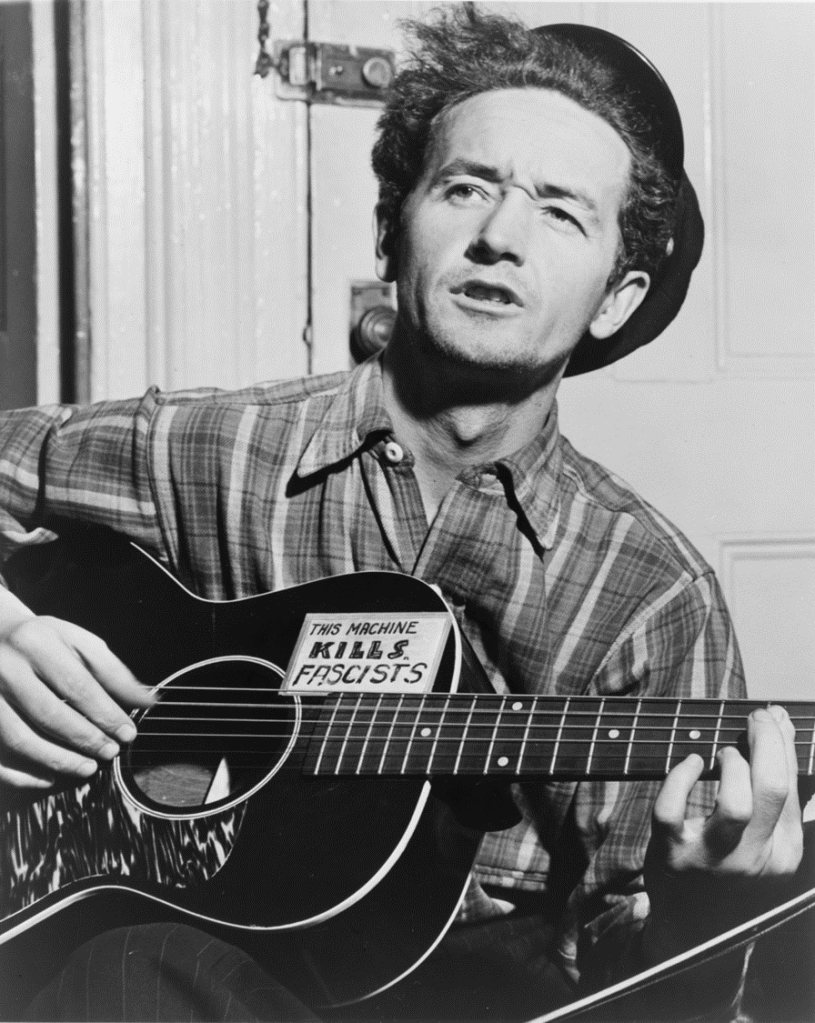
Early in the 1950s Guthrie was struck down with Huntington’s Chorea which led him to a hospital in NJ where he received 24 hr care . So Dylan left the north country and came to visit him, playing and singing songs at his bedside and soon getting known in the folk clubs of Greenwich Village NYC. He said of himself at that time: ‘I was a Woody jukebox’.
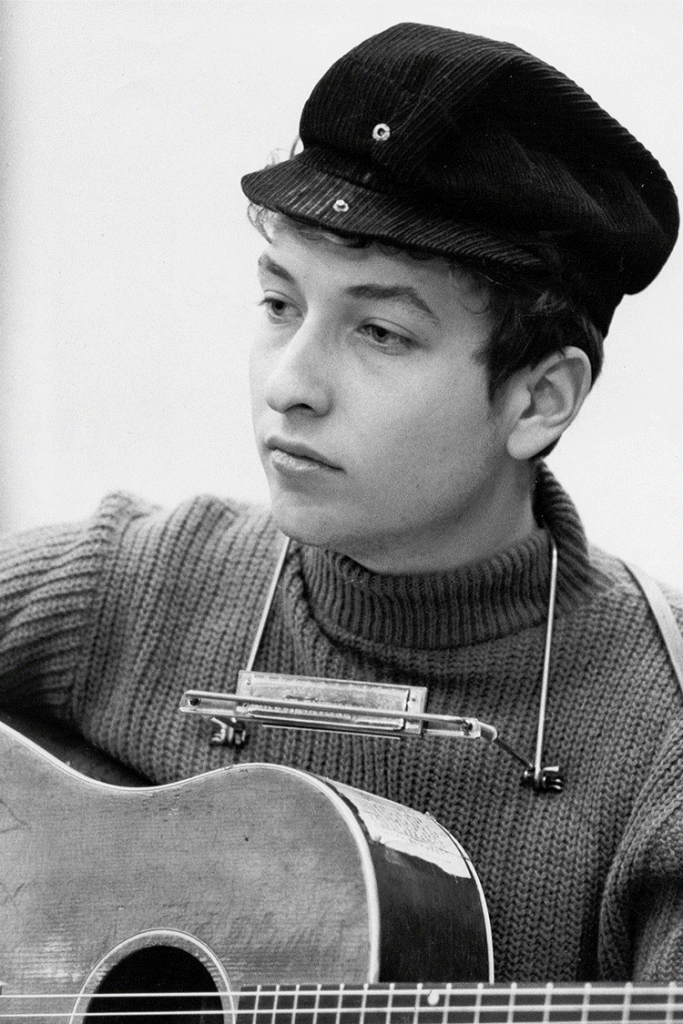
Dylan became better and better known in the New York folk scene, eventually performing shows and getting a contract with Columbia records. He also soaked up the political thought that was swirling around at that time and started commenting on it.
The USA in the early 60s was disfigured not just by war and the fear of war but also by racial injustice. Strongly influenced by his girlfriend at the time and other social radicals in and out of the folk scene, Dylan started to write songs which commented on and protested against many of the strong forces in society which set people against each other. Sometimes he sang about the victims, at others he painted on a wide canvas. In this early great song written in the shadow of the Cuban Missile Crisis, Dylan discovers his poetic voice, taking his hearers on a tour of the world and reporting what he has heard, seen and met and how he will respond. ‘A Hard rain’s a-gonna fall’ .( https://www.youtube.com/watch?v=T5al0HmR4to
Live performance: https://www.youtube.com/watch?v=3d5K9QyUBY8
What incredible poetry for a man of 21 and what maturity! Dylan has often been called prophetic and this song truly is, more relevant to our times than ever. Yet for me, it’s more. When I felt called to the ministry of the church in the mid 80s the words of that last verse were so important to me that I used them in a service at my theological (training) college to articulate my calling as a priest. ‘I’ll tell it and speak it and think it and breathe it.’ They still stop me dead in my tracks.
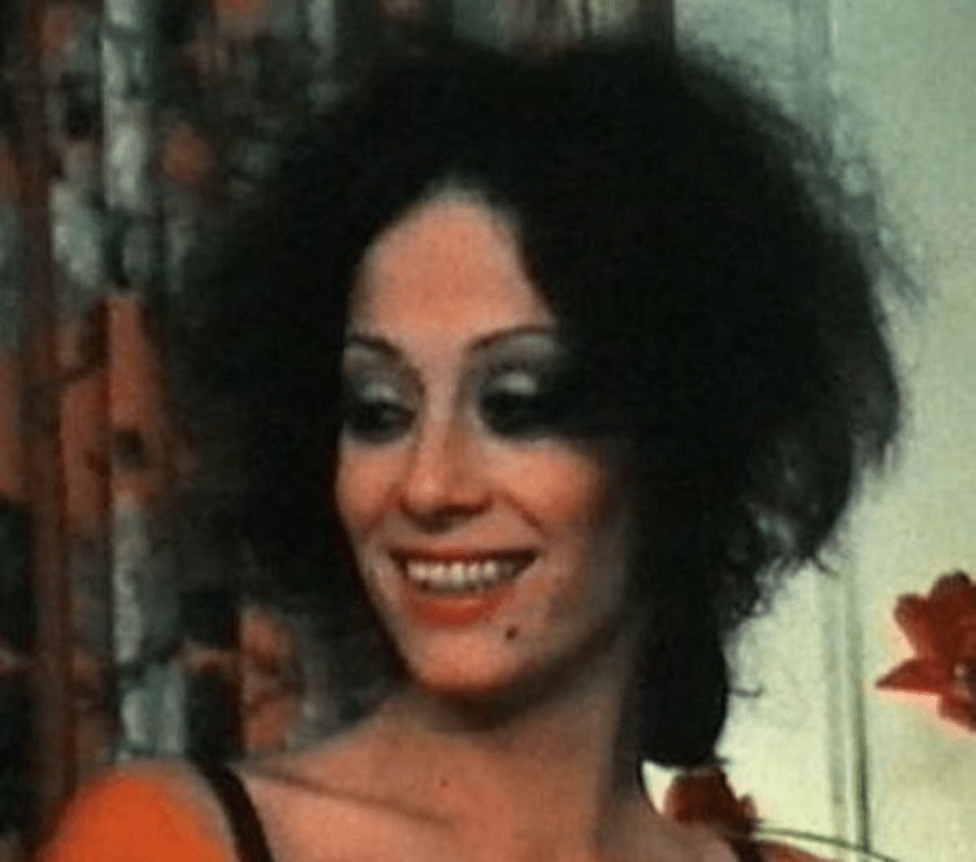
As his fame grew, he outgrew the folk scene and his girlfriend and started to mix in different circles. For a while he was very closely connected with Joan Baez, ‘Queen of Folk’ but he chose instead to marry a former model, Sara Lowndes. She was quiet and well hidden from the public, so quiet and low-profile, with some calling her Zen-like, that he sang ‘My love she speaks like silence.’ It was to be the first of many songs sung in praise of his wife over the next 10 years. ‘Love minus zero/No limit’ (https://www.youtube.com/watch?v=7ZzyRcySgK8)
Live performance:https://www.youtube.com/watch?v=feqSVJ4wZvo
Back to the music. The early Dylan articulated the suffering in the world, standing in the midst of the waves as they surged around him. Yet he was no politician nor spokesman. His poetry may have been mature, but he didn’t want to lead a movement and stand on platforms with those he saw as old men. Later he would sing: It’s never been my duty to remake the world at large, Nor was it my intention to sound a battle charge.’
He needed to assert his own artistic freedom which meant finding a different voice with different poetry, musicians, and instruments.
Taking influence from the American Beat movement, other poets and the R&B with which he was brought up, his language became more complex, surrealist, and dystopian, as his quest for meaning moved inwards. In the period from mid 1964-66 he wrote songs considered now by many to be his greatest, yet which disappointed many of his folk and ‘protest’ followers who saw him as a sell-out, even (in a famous shout from the audience at a concert), ‘Judas!’ Yet in a way he was still protesting, and pushing at the boundaries of definition., Dylan is now protesting against a world that seems twisted out of joint and without meaning, where nothing or no one fits the purpose for which it was made.
No song expresses this more bleakly than the next, presenting us with a parade of historical figures not doing what they’re meant to do. Einstein ‘bums a cigarette’, Romeo is in the wrong place, Casanova has lost his self-confidence; The Good Samaritan dresses for the show; great poets scrap with each other as the Titanic goes down, and the door knob is broke. Everything is broken. And yes- postcards of Black lynchings really were on sale in the Southern States of the USA up to the 1930s. ‘Desolation Row’ ( https://www.youtube.com/watch?v=hUvcWXTIjcU
LIve performance:https://www.youtube.com/watch?v=fY1O976Pcm0
Then, one fateful day near his home in Woodstock Upper NY state on a break in a gruelling world tour in 1966, his life changed completely. He fell off his motorbike, badly damaging his neck and needing to rest for an extended period.
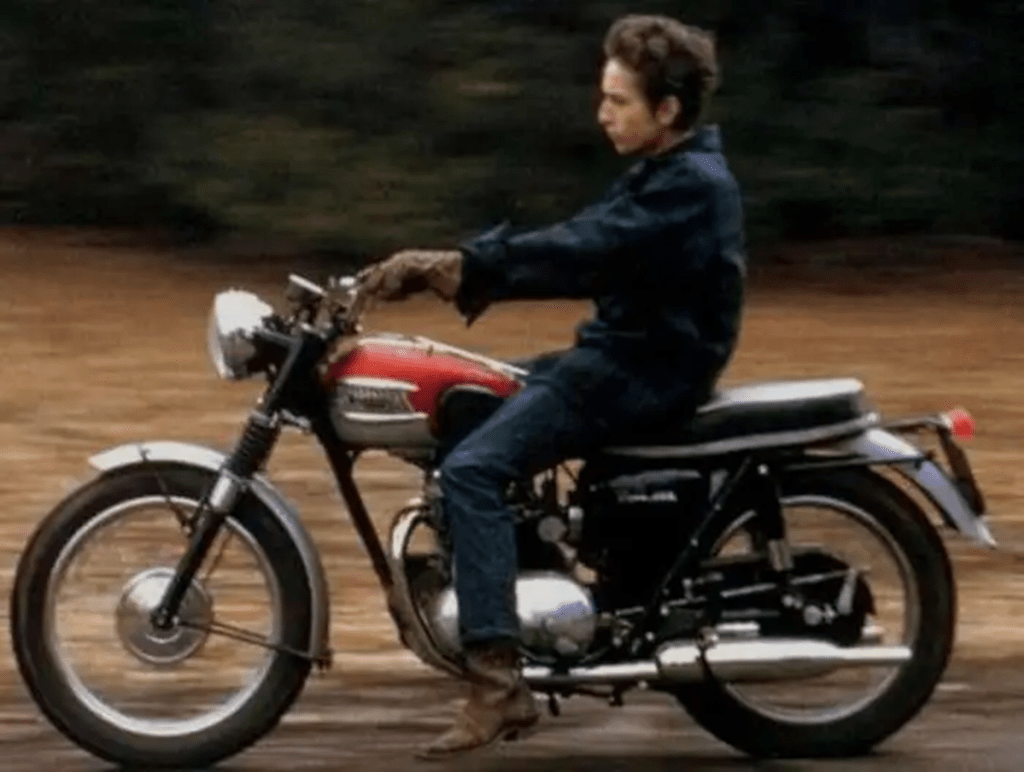
Sara’s love, fatherhood, the need to recuperate, the countryside and the presence of his bandmates down the road to keep the music going, led to another life-changing metamorphosis.. Let’s think of how he was at the end of that world tour in 1966. Drained, drugged, shouted at by fans, yet driven on by a powerful and greedy manager. In 1968 he would have been 27. Think of the roll-call of rock stars who have died at that age: Hendrix, Morison, Joplin, Cobain, Winehouse. No exaggeration then to call this accident a salvation.
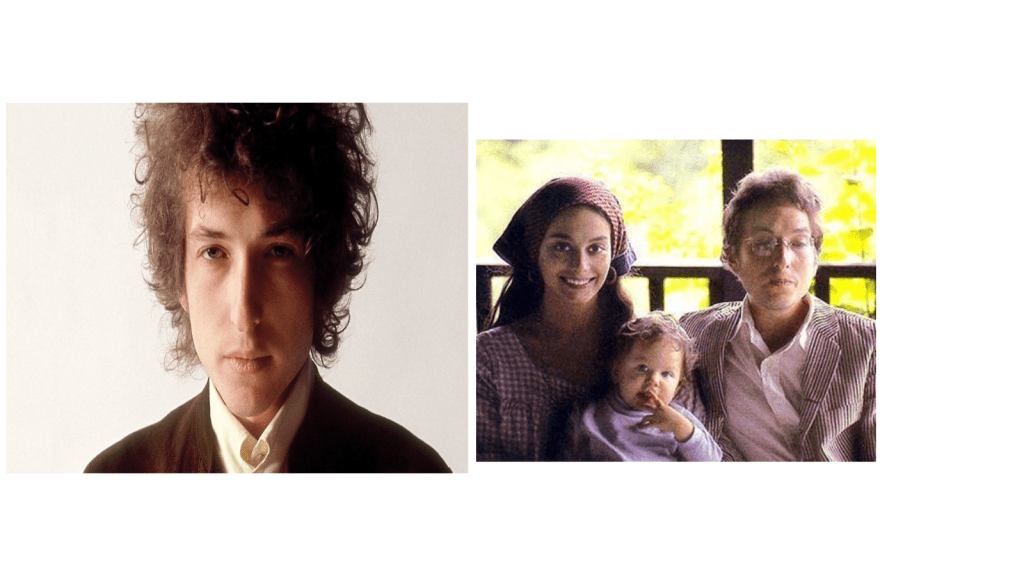
While young people the world over were ‘tuning in, turning on (to drugs) and dropping out’ Dylan was raising children, dressing conventionally and composing austere folk songs partly inspired by the Bible in the centre of his living room. This is the most famous. ‘All along the Watchtower, written by Dylan but made famous by Hendrix. The Bible verse in question is probably Isaiah 21:6 (‘The Lord said to me ‘Go, post me a watchman, let him say what he sees..) All along the watchtower. (https://www.youtube.com/watch?v=bT7Hj-ea0VE
Live performance: https://www.youtube.com/watch?v=Zk0ruiwmxdA
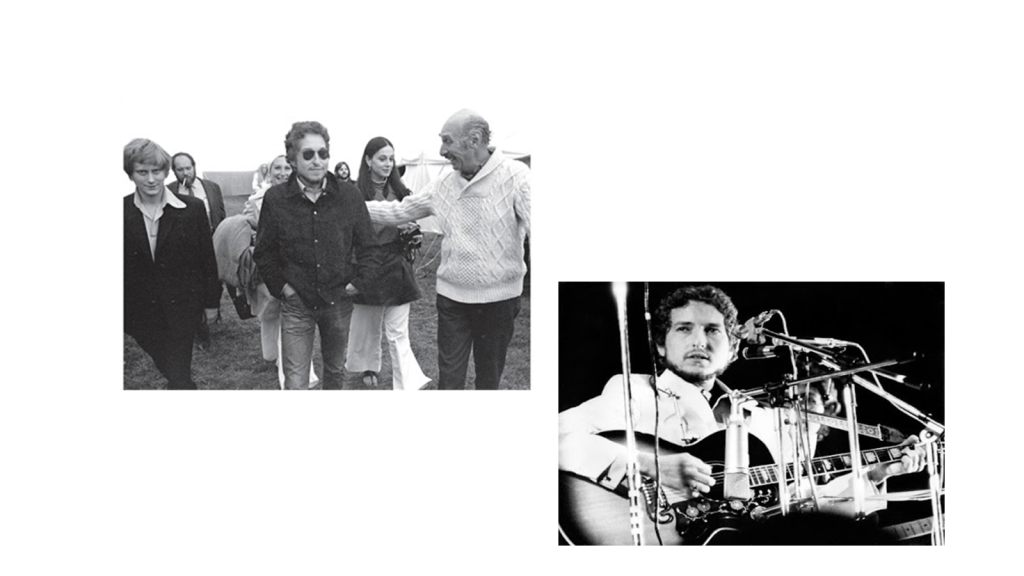
Yet the same fans who booed him off stage 2 years later were now seeking him out and not letting him rest. Despite his total lack of interest in politics and the counter-culture, fans wanted to know the Pop Messiah’s views on such things, hounding him and his family down. That was the time the Woodstock festival was being planned, based not in Woodstock where Dylan lived, but named in honour of the pied piper whom they hoped to entice. Dylan stubbornly refused their offers, yet three brothers from the IOW succeeded in theirs, drawing him and a massive crowd to Woodside Bay. Pictures from the Festival show a smartly dressed and tight-lipped Dylan ill at ease amongst such crowds and adulation and keeping close to his wife.
Dylan returned home and initially continued to hold to the vision of quiet peace and family happiness, moving first to NYC and even to Arizona for a while in pursuit of it. These words from a song on his ‘New Morning’ album of that period put it nicely. ‘Sign on the Window.’
Build me a cabin in Utah/ marry me a wife, catch rainbow trout/ have a bunch of kids who call me Pa/ that’s what it must be all about .

But we’re going to end part 1 singing his most famous song from this time, extolling traditional values of faith and family, addressed to his young son. ‘Forever Young.’ (https://www.youtube.com/watch?v=Vz231O7Cw-I
Live performance:https://www.youtube.com/watch?v=NIgJiGv-Nd4
Part 2.
You aint goin’ nowhere. https://www.youtube.com/watch?v=DQK6nBnZHLE
Live performance: https://www.youtube.com/watch?v=0opATRykjaQ
This song perfectly evokes that lazy, carefree time, mixed with a good dose of nonsense. Yet even in the midst of that nonsense we have the profound words: ‘Strap yourself to the tree with roots.’
After 8 years in relative seclusion living in NY state , NYC and Arizona, Dylan eventually gave in to the many requests to go back on the road, which he did early in 1974. It is said that 1/10th all American adults applied for tickets.
A mixture of touring pressure leading to an affair followed by intensive classes from an artist who made him look at everything in a whole new way led to a serious rift in his marriage. It also led to what many consider to be his greatest album ‘Blood on the Tracks’. He said of it ‘some people tell me they enjoy it. How something so painful can be enjoyed I don’t know.’ The most searing song on the album is Idiot Wind, in which he reflects that the wind that blew through creation in Genesis 1 has now become, in Shakespeare’s words: ‘a tale told by an idiot, full of sound and fury, signifying nothing. ‘Idiot Wind: blowing in a circle round my skull, from the Grand Coulee Dam (in the West) to the Capitol (East). Idiot wind, blowing through the buttons on our coats, blowing through the letters that we wrote; Idiot wind, blowing every time you move your teeth; idiot wind, it’s a wonder that we still know how to breathe.’
Dylan’s honesty, in telling it like it is, is for me one of his greatest contributions to art. He doesn’t sugar-coat anything.
These are pretty searing too, from the same album: ‘You’re a big girl now.’ (https://www.youtube.com/watch?v=wroaKf8ekFQ
Live performance: https://www.youtube.com/watch?v=6peW6dPHjUA
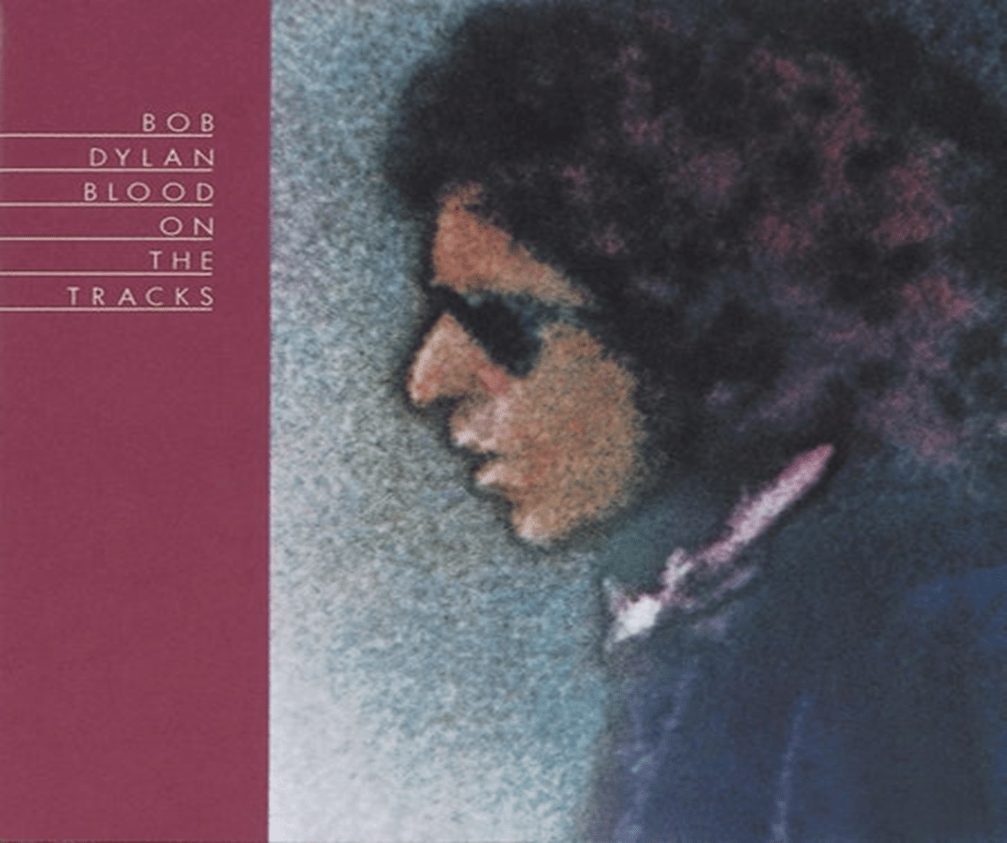
Dylan and Sara attempted a brief reconciliation in 1975 but everything went from bad to worse, leading to their divorce 2 years later. Despite another failed marriage and many other relationships, no woman ever truly replaced Sara. And as for his life as a father, his son Jakob has said ‘husband and wife failed but father and mother have been a success.’
Following his divorce Dylan embarked on another massive world tour, including a huge outdoor concert in Berkshire which some consider his best ever, and an album full of pent up tension with a strong feeling of something just around the corner. This song from that album ‘Steet-Legal’ is called ‘Senor’ which is the Spanish for both ‘Sir’ and ‘Lord.’ https://www.youtube.com/watch?v=lrxzJL8z0W8
Live performance: https://www.youtube.com/watch?v=ztXLmQfEEmk
At one of the last concerts on that tour in Dec 1978 someone threw a cross on stage which he put on. Later, in his hotel room, he reported seeing a vision of Jesus and later accepting him into his life. In the new year he enrolled in a Bible school and in August released ‘Slow train coming’, confirming the rumours of his conversion. The Christian expression on the album is not always kind, often harsh and judgmental, but invariably punchy and direct, just as were his early protest songs. This first one, the opening track on STC, certainly is . However high and mighty, you still have to serve somebody or something, even if your childhood nickname was ‘Zimmy’ and you live in a mansion (as he still does) with a dome in Malibu CA.
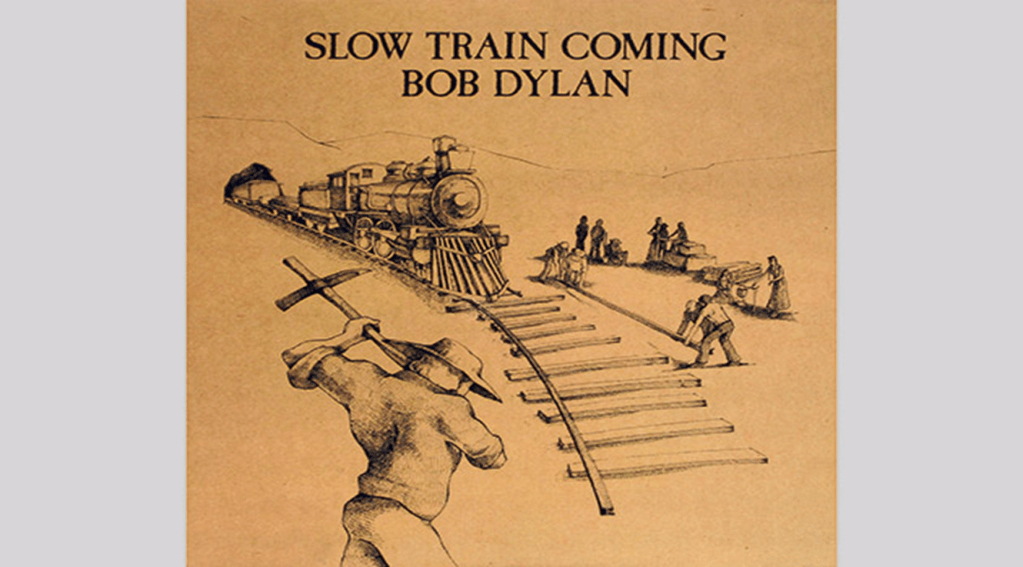
Gotta serve https://www.youtube.com/watch?v=wC10VWDTzmU
LIve performance: https://www.youtube.com/watch?v=FIC5kOrimPU
This second one is the last track on the 3rd of his Gospel trilogy. It has a kinder, more reflective feel to it, taking inspiration both from the Gospel words: ‘Every hair of your head is numbered’ and ‘no sparrow falls without being seen by your Father’ and William Blake’s ‘to glimpse heaven in a grain of sand and eternity in an hour.’
Every Grain of sand. https://www.youtube.com/watch?v=bV5z_rVR6Ms
Live performance: https://www.youtube.com/watch?v=Zv3RKXJtr14
It is worth noting that, until very recently, Dylan ended every concert with this song.
Jesus and faith generally, including the Jewish faith of his upbringing, have continued to be central to his life. ‘I am a true believer’ (2009) Yet this faith hasn’t stopped him searching: He once said something like: ‘The key thing for me, is to keep searching, keep travelling, Once you claim to have arrived, that’s when the trouble starts’. Dylan tours constantly, a strange thing for someone who owns many houses. He has said, ‘A lot of people don’t like the road, but it’s as natural to me as breathing. I do it because I’m driven to do it. It’s the only place where you can be who you want to be.’
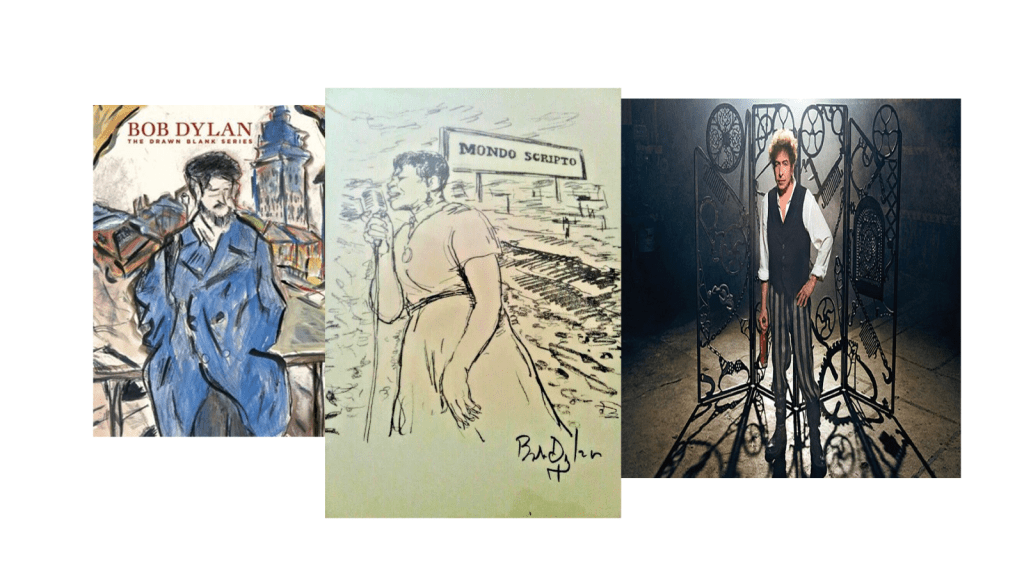
In the 21st Century Dylan has continued to explore new areas. He has painted, sketched and done ironwork sculptures. In 2016 he was awarded the Nobel Prize. He continues to search his roots, looking back to the music he listened to in his childhood, the dance band era, covering songs he and his 1960s contemporaries were meant to reject, such as Frank Sinatra and Bing Crosby. He even did a stint as a Radio DJ and wrote a book called ‘The philosophy of modern song’ which only features one song from the last 45 years and none of his!
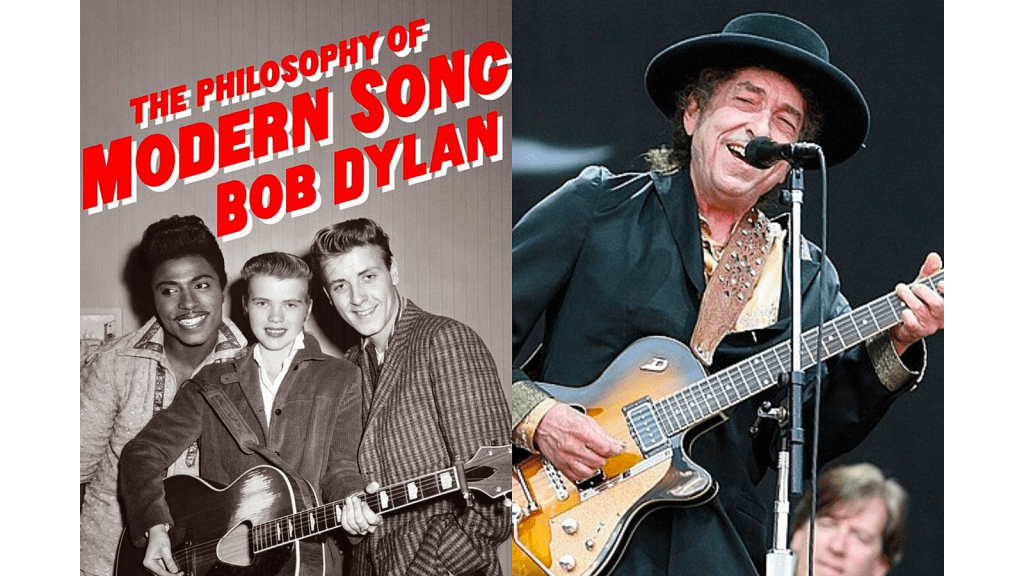
His knowledge of the American music of the 20th C is unsurpassed. As someone brought up in the 60s and early 70s, with the Beatles and other British bands to follow, I had no interest in American music. Bob Dylan, who in his time has played folk, rock n roll, rhythm and blues, Country, Gospel and dance-band swing, has been for me a portal into the glorious genre called ‘Americana’. Yet the more I hear the music of his predecessors and influences, the more I am grateful for the unique depth he has brought to modern music, which makes most other artists shallow in comparison. As Bruce Springsteen has said: ‘Elvis freed your body; Dylan freed your mind.’
Yet generosity towards other musicians is one of Dylan’s more attractive qualities. In his latest studio album ‘Rough and Rowdy Ways’ he pays endless tributes to the musicians who came before him (One song mentions more than 30 musicians from the 20th C)
He sings in another song: ‘I’m the enemy of the unlived, meaningless life….’
Which leads towards my conclusion.
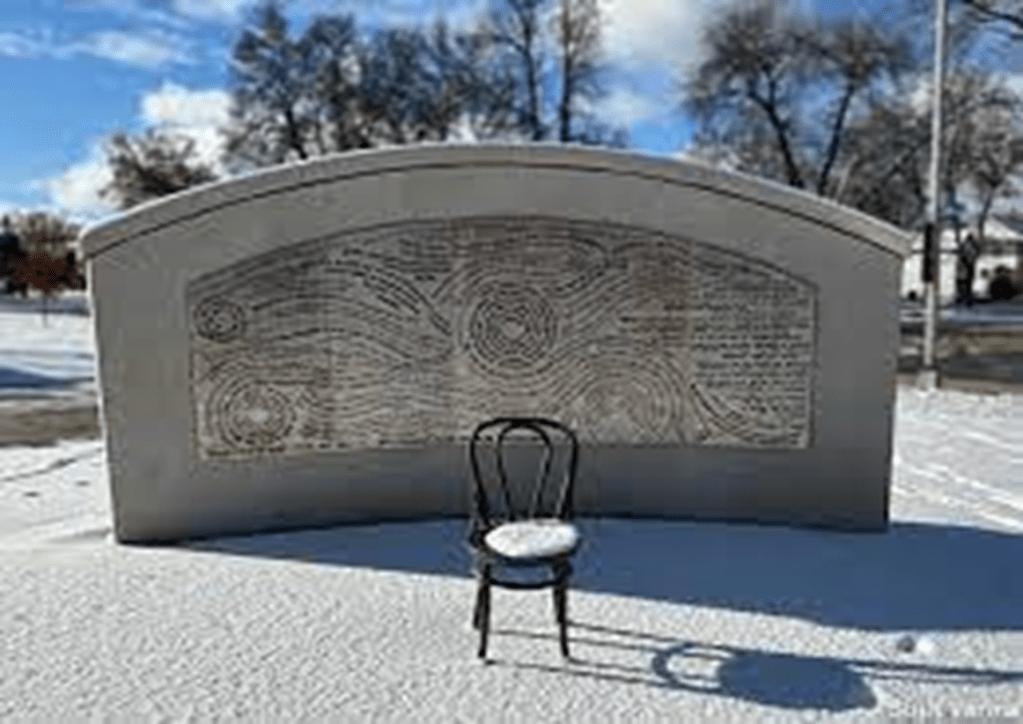
First, I want to bring it all back home to where we and he started. Hibbing MN, where he moved with his family for his later childhood years. A few years ago this Memorial was erected outside The High School which he attended. It is in two parts. First a wall on which many of his most famous lyrics are inscribed and, placed in front of them a bronze chair from which you can look out onto the world. That, to me, is what Dylan is about. It really isn’t about him but his ability to help us look at life and the world in a certain way.
At the end of the 2003 film ‘Masked and Anonymous’ where Dylan plays the key character ‘Jack Fate’, he says these words (as Jack) : ‘I was always a singer, and maybe no more than that. Sometimes it’s not enough to know the meaning of things. Sometimes we have to know what things don’t mean as well. Like what does it mean to not know what the person you love is capable of. Things fall apart, especially the neat order of rules and laws. The way we look at the world is the way we really are. See it from a fair garden, everything looks cheerful. Climb up to a higher plateau and you’ll see plunder and murder. Truth and beauty are in the eye of the beholder.’
Dylan helps us to see the beauty and the brokenness of things.
I want to end with 3 songs from the 1960s which say so much about Dylan’s quest for meaning.
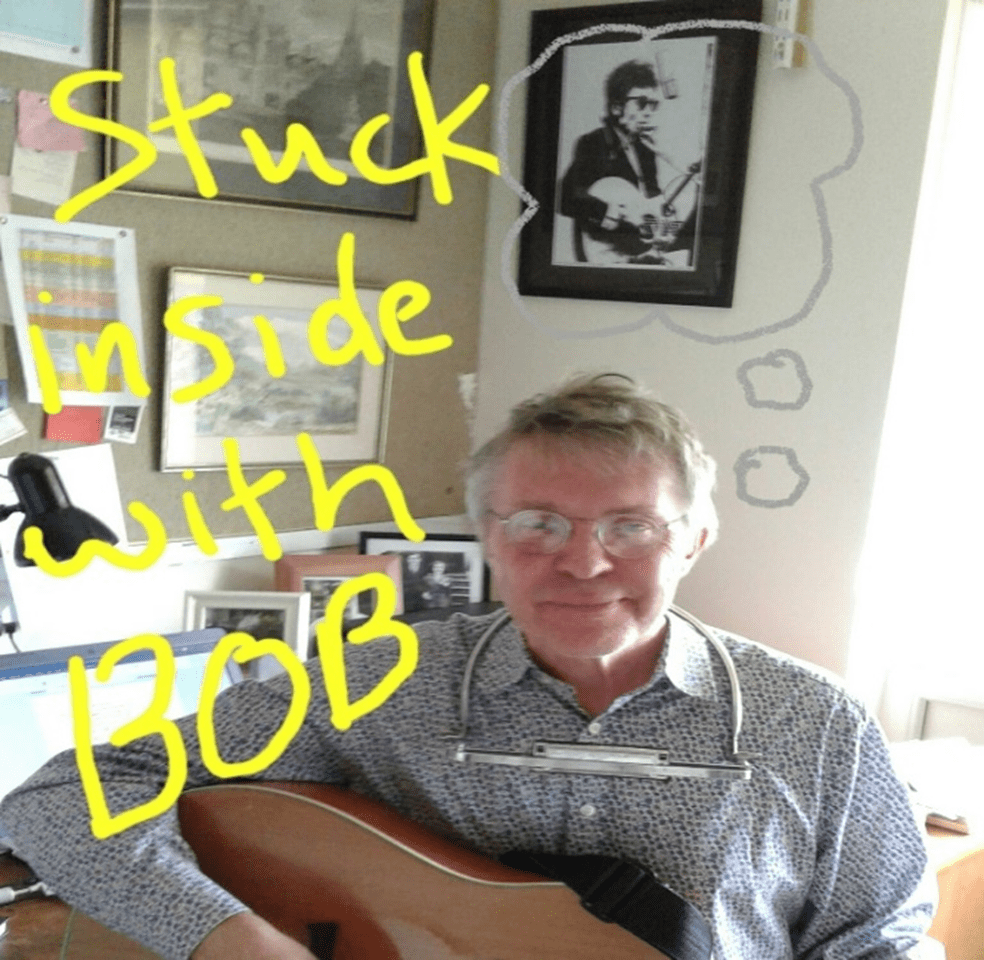
The first is ‘I shall be released,’ which he recorded originally with the Band in that Woodstock hideaway. Like many of his songs, it’s starts with something specific- a man in jail- and moves on to the universal. All of us live with restrictions, including the rich and famous.. Bob Dylan has spent much of his life being defined and penned in by his situation and people’s expectations. To all these restrictions , he sings, ‘I shall be released.’ This song was really important to me in lockdown when we were hemmed in, longing for release, and it remains important as I get old. Any day now…
I shall be released https://www.youtube.com/watch?v=MjtPBjEz-BA
LIve performance: https://www.youtube.com/watch?v=Jue3yqP_tMw
The next song is one of his greatest and most defining songs, contemplating the fall from grace of a socialite, or someone else high and exalted in mid-60s pop culture. Yet was it written also for himself, as he said goodbye to his old persona and followers and charted a different and lonelier path? He may have written all those songs, have won all those awards, possess all those houses, but in the end he’s on his own, a complete unknown, as we all are, even if we have a family and friends. It’s come to mean a lot to me in the last year, as my wife and I moved from being well-known figuresin a big house in this community to ‘complete unknowns’ in a tiny house on a new estate. It’s a good transition, signalling the renunciation all of us faces as we get older . ‘Ashes to ashes, dust to dust’ . When you aint got nothing, you’ve got nothin’ to lose.’
Like a Rolling Stone https://www.youtube.com/watch?v=IwOfCgkyEj0
Live performance: https://www.youtube.com/watch?v=7Vjabh3zK0A
And finally…We couldn’t finish without this. You may well ask me ‘So what is the meaning of life according to BD?’ Dylan would not allow me to tie him down. He asks questions, and though he has given answers over the years- ‘seeking justice’,, ‘love of a good woman and family’ , ‘God Jesus and the Bible’ ‘music and songs’ , in the end it is elusive, ‘The answer my friend……’ Over to you.Blowin’ in the Wind https://www.youtube.com/watch?v=MMFj8uDubsE
Live performance:https://www.youtube.com/watch?v=IYzSuW9CEyo
 Hugh's Views